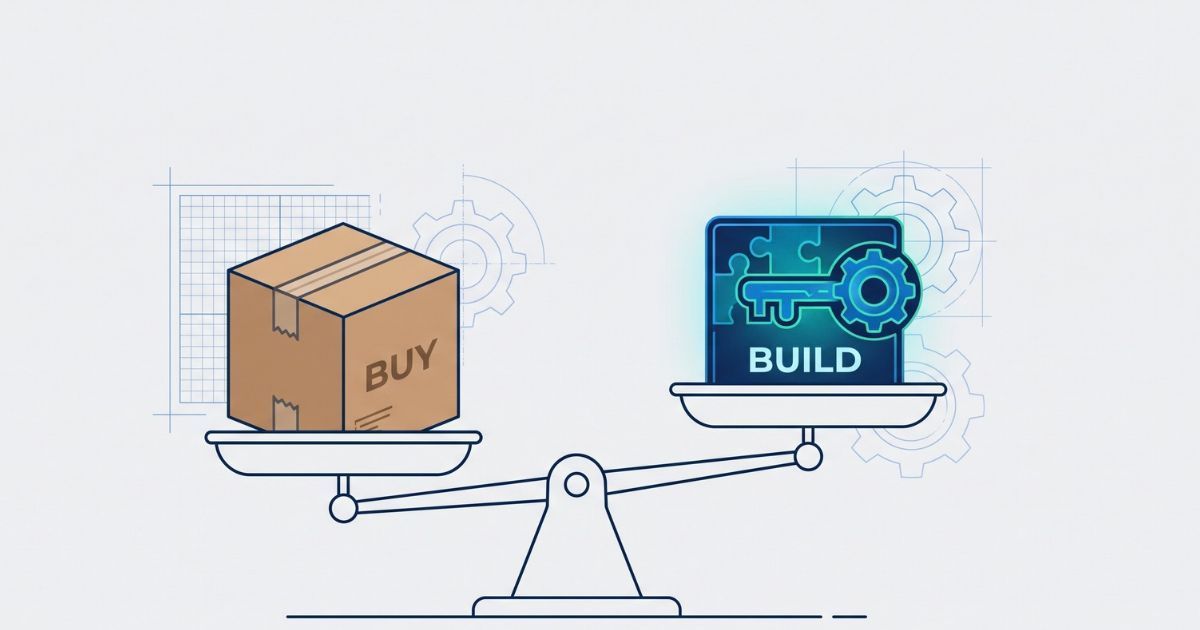


Build vs. Buy: When Custom Software Actually Makes Sense
For mid-sized businesses crossing the $5M to $20M revenue mark, technology decisions carry serious weight. You know your current spreadsheet-driven processes are creating bottlenecks, but the idea of building custom software sounds risky, expensive, and overwhelming.
Many business owners ask a very logical question: "Why take a chance on a custom build when I can just use a verified, industry-standard tool like QuickBooks?"
Furthermore, if you build something custom, aren't you suddenly responsible for monitoring it, fixing it, and forcing your employees to learn a complicated new system? These are valid concerns. This guide will walk you through exactly when you should buy off-the-shelf software, when you should build custom, and how to navigate the operational risks of both.
The Hybrid Approach: Why Not Just Use QuickBooks?
You absolutely should use QuickBooks—for your accounting. The most effective approach for mid-market companies is hybrid: buy off-the-shelf software for commodity functions and build custom software for your competitive advantage.
Accounting, email, and basic human resources are solved problems. Building a custom version of QuickBooks would be a massive waste of resources. However, off-the-shelf systems fall short when they try to manage the specific ways your field teams operate, how you gather site data, or how you estimate complex jobs.
- Buy for Parity: Use existing, pre-built solutions for standard administrative tasks (like payroll or general ledger).
- Build for Advantage: Use custom development for the workflows that directly impact your profit margins, speed of delivery, or customer experience.
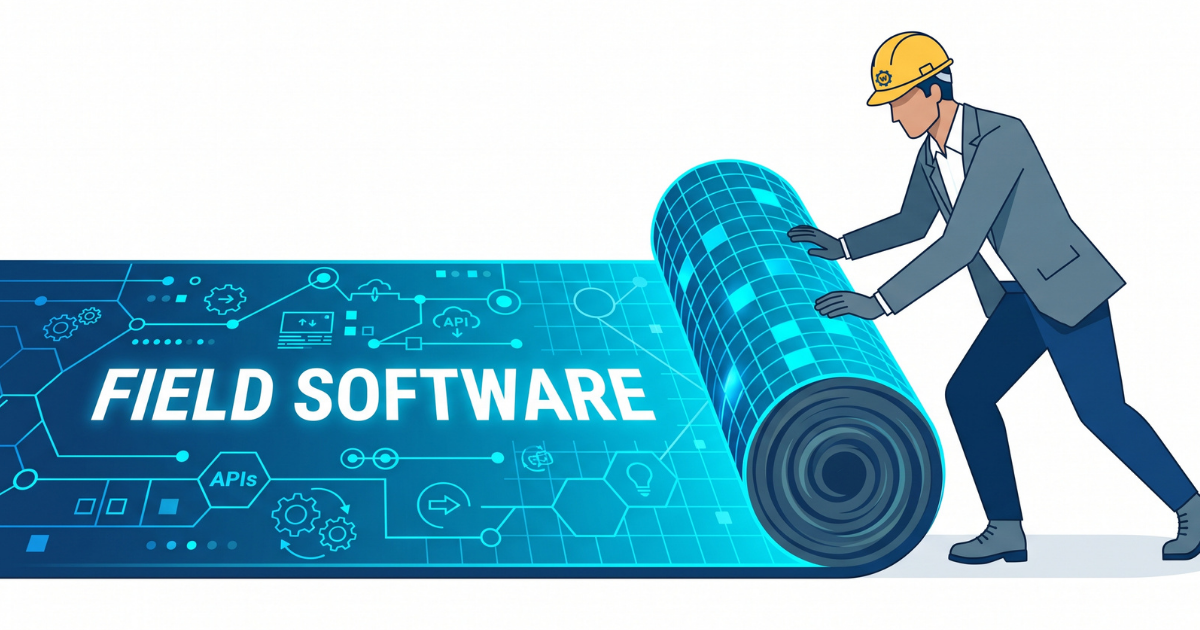
- Connect the Two: A good custom platform like Lift Office acts as the operational bridge, capturing unique field data and feeding it directly into QuickBooks without requiring double data entry.

What Do You Actually Gain With Custom Software?
Custom software delivers an exact workflow fit and often results in lower long-term costs at scale. When you buy an off-the-shelf product, you are buying a generic process designed for thousands of other companies.
If that pre-built software doesn't perfectly match how you run your business, your team is forced to create manual workarounds. Those workarounds usually look like a messy combination of spreadsheets, whiteboards, and text messages that drain time and cause billing errors.
Does Going Digital Actually Save Time?
A well-designed digital system saves time by eliminating duplicate effort. If a foreman writes down hours and materials on paper, an office manager has to decipher that handwriting and type it into a CRM, and then an accountant types it again into the billing software. By moving to digital, the data is entered once in the field and instantly populates where it needs to go.
Will Employees Hate Learning a New System?
They will only hate it if the software forces them to change a process that already works. Custom software is built around your actual business operations. Because the digital steps mirror the physical steps your employees are already taking, the learning curve is dramatically reduced.
Who Manages the Risk When Things Break?
When you partner with a professional software agency, they manage the uptime, security, and maintenance so your team does not have to. You are not left holding the bag if a server goes down or an integration needs an update.
A common fear is that owning custom software means you have to become an IT company. In reality, a dedicated software partner provides ongoing support and active monitoring. Furthermore, as the sole owner of a custom product, you have complete control over security, user permissions, and exactly when updates happen. With off-the-shelf SaaS, you are entirely dependent on the vendor's timeline; if their system goes down or they change a feature you rely on, you have zero control.
How to Know if Your Software Partner Knows Their Stuff
A trustworthy software partner will spend significant time analyzing your business processes before they ever talk about writing code. They will not immediately recommend a custom build if a simpler solution exists.
With the rise of AI tools, many people can generate basic code. But writing code was never the most difficult part of software development. The true value lies in the architecture: ensuring the data is secure, the system can scale as you hire more people, and the tools are actually solving the right problem.
At Modern Mindset Development, we use a Plan-Do-Study-Act (PDSA) methodology. We look for root causes rather than just treating symptoms with shiny new apps. We map out your entire workflow, find the bottlenecks, and design software that simplifies your day.

The decision to build or buy isn't all-or-nothing. By buying standard tools for accounting and building tailored software for your core operations, you get the best of both worlds. You gain efficiency, protect your margins, and keep your team working smoothly.
Ready to figure out what your business actually needs? Schedule a discovery call with Modern Mindset Development. We will help you audit your current processes and give you an honest recommendation—whether that means custom software or just a better way to use the tools you already have.
Frequently Asked Questions
Is custom software always more expensive than off-the-shelf software?
Off-the-shelf software usually has lower upfront costs, but custom software often results in a lower total cost of ownership over a 3 to 5-year period. SaaS licensing fees grow exponentially as you add more users, whereas a custom platform scales without arbitrary per-user penalties.
Will my field employees struggle to learn custom software?
No, because custom software is built to match your exact business processes. Unlike off-the-shelf tools that force workers to learn a vendor's rigid workflow, a well-built custom app mirrors the steps your employees already take, making the transition highly intuitive.
Should I replace QuickBooks with custom software?
No, you should keep QuickBooks for your core accounting needs. The most successful approach is a hybrid model: use trusted off-the-shelf tools for standard commodities like accounting, and build custom software for your unique field operations, connecting the two via secure integrations.
Who fixes custom software if it breaks or goes offline?
When you hire a professional custom software development company, they manage the maintenance, hosting, and security for you. You do not need to hire an internal IT team to monitor the platform, as your partner provides ongoing, reliable support to ensure maximum uptime.
Close the gap from the field to the front desk.
Real-time reports. Zero double-entry. One platform. It’s time for a system that’s as mobile as your crew.