

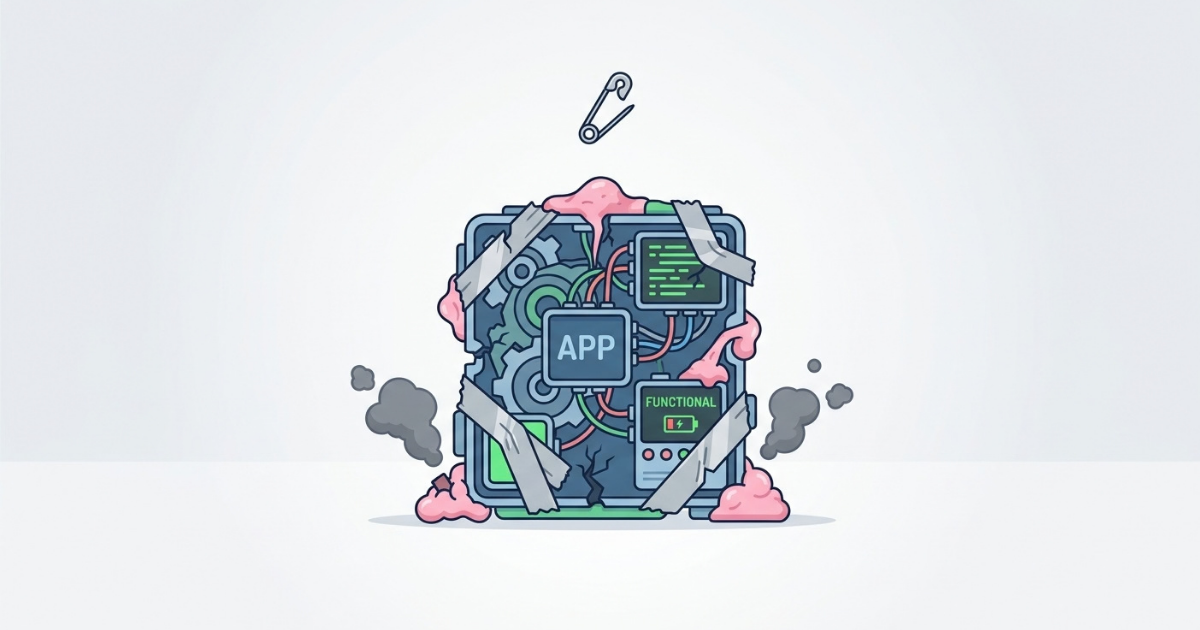
5 Signs Your Growing Business Has Outgrown Spreadsheets
If you've been in business for any length of time, chances are spreadsheets played a role in getting you where you are today.
For decades, Microsoft Excel has been the go-to tool for organizing information, tracking projects, managing budgets, and solving countless day-to-day business challenges. It's flexible, familiar, and powerful enough that many companies build entire workflows around it. In the early stages of a business, that's often exactly the right decision. Why invest in specialized software when a spreadsheet can accomplish the task?
The problem is that businesses don't stay the same.
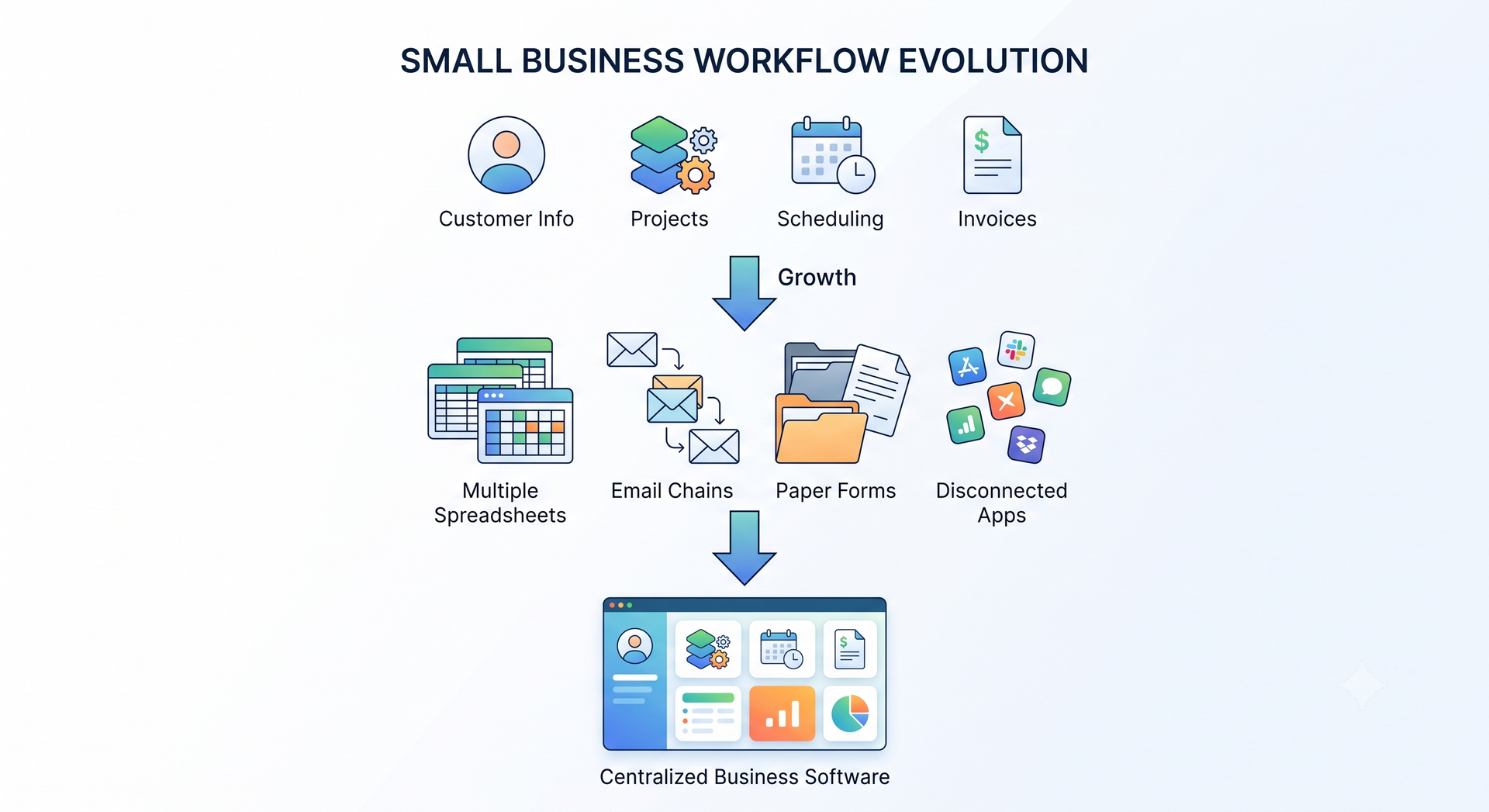
As companies grow, so do their customers, employees, projects, and responsibilities. Processes that once involved two people now involve twenty. Information that was once stored in a single workbook becomes scattered across departments, shared drives, email attachments, and cloud folders. Little by little, the spreadsheet stops being a tool and starts becoming the system that runs the business.

That's usually when the warning signs begin to appear.
At Modern Mindset Development, we've worked with organizations throughout Connecticut and beyond that reached this exact point. They weren't looking for the newest software trend or another subscription service to add to the monthly budget. They simply wanted their business to run as efficiently as the company they'd worked so hard to build.
The interesting part is that almost every one of those companies thought they had a technology problem.
More often than not, they had a process problem.
Technology simply became the vehicle for solving it.
Growth Changes the Way Information Moves
A spreadsheet works exceptionally well when one person owns the information. It works reasonably well when a small team shares responsibility. It becomes much more difficult to manage when multiple departments begin relying on the same data to make daily decisions.
Imagine a growing construction company.
The estimating team maintains one spreadsheet for bids. Operations tracks project schedules in another. Accounting has its own workbook for invoicing, while project managers keep separate job notes and equipment logs. Field supervisors email daily reports, customer contact information lives somewhere else entirely, and everyone has developed their own way of organizing files.
None of these systems are necessarily wrong. In fact, each one may work perfectly for the individual using it.
The challenge is that the business no longer operates as a collection of individuals. It operates as a connected organization where every department depends on timely, accurate information from another.
That's where spreadsheets begin showing their limitations—not because Excel has failed, but because the business has outgrown what spreadsheets were designed to do.
Sign #1: Your Team Spends More Time Managing Information Than Using It
One of the first indicators that a business has outgrown spreadsheets isn't a technical issue at all. It's a time issue.
Employees begin spending an increasing amount of their day searching for files, confirming that they're working from the latest version, copying information between systems, or asking coworkers to resend documents they know already exist somewhere.
Individually, each interruption feels insignificant. Collectively, they create hours of lost productivity every week.
More importantly, they shift employees away from the work they're actually hired to do. Estimators become data managers. Project managers become file organizers. Office staff spend valuable time reconciling information instead of serving customers or improving operations.
When information becomes harder to manage than the work itself, the issue usually isn't employee performance—it's the system supporting them.
Sign #2: Every Department Has Created Its Own Way of Doing Things
Growth often brings specialization. Sales develops its own process. Operations develops another. Accounting creates workflows that make sense for financial reporting, while field employees find practical ways to document work on the jobsite.
None of these decisions are made with bad intentions. They're made because each department is trying to solve immediate problems.
Over time, however, those independent solutions begin creating organizational silos. Information has to be re-entered, reports don't match, customers receive inconsistent communication, and leadership spends more time reconciling data than making decisions.
This is one of the most common situations we encounter when meeting with prospective clients.
They're not asking us to build software because spreadsheets are inherently flawed.
They're asking because their business has become too interconnected to rely on disconnected systems.
Sign #3: Your Business Relies on Tribal Knowledge

Every growing company has people who seem to know everything.
They know which spreadsheet contains the most up-to-date pricing. They know why a particular customer has two different account numbers. They know that one workbook shouldn't be touched because it feeds another report, or that a certain formula was written years ago and no one is quite sure how it works anymore.
At first, this kind of institutional knowledge can feel like a strength. Experienced employees become trusted resources, and newer team members learn by asking questions. Over time, however, the business becomes increasingly dependent on a handful of individuals rather than well-defined processes.
This creates an unexpected risk. When a key employee takes a vacation, retires, or accepts another opportunity, they don't just leave with years of experience—they often leave with the unwritten knowledge that kept critical parts of the business moving.
We've seen organizations where a single spreadsheet became so complex that only one employee felt comfortable making changes to it. That employee wasn't trying to create a dependency; the spreadsheet had simply evolved over years of solving one problem after another. New columns were added, formulas became more complicated, and workarounds accumulated until the file itself had become part of the company's institutional knowledge.
Technology should reduce that kind of dependency, not reinforce it.
Well-designed software makes processes consistent, documents workflows, and allows knowledge to become part of the system rather than remaining locked inside someone's head. It enables businesses to grow because success is built on repeatable processes instead of individual memory.
Sign #4: Reporting Has Become a Project of Its Own

Business leaders rely on accurate information to make good decisions. The challenge isn't collecting data—most organizations have plenty of it. The challenge is turning that data into something meaningful before the opportunity to act has already passed.
As businesses grow, reporting often becomes surprisingly manual.
Monthly meetings require hours of preparation because information must be gathered from multiple spreadsheets. Financial reports need to be reconciled against project updates. Operations wants one set of numbers while accounting has another. Managers export data, combine worksheets, adjust formulas, and double-check calculations before anyone feels confident enough to present the results.
Eventually, reporting stops being a reflection of the business and becomes a project in itself.
That delay has real consequences. Leaders end up making decisions based on information that's already days—or even weeks—out of date. Small operational issues remain hidden until they become much larger problems, and opportunities to improve efficiency are often missed simply because the data wasn't available when it was needed.
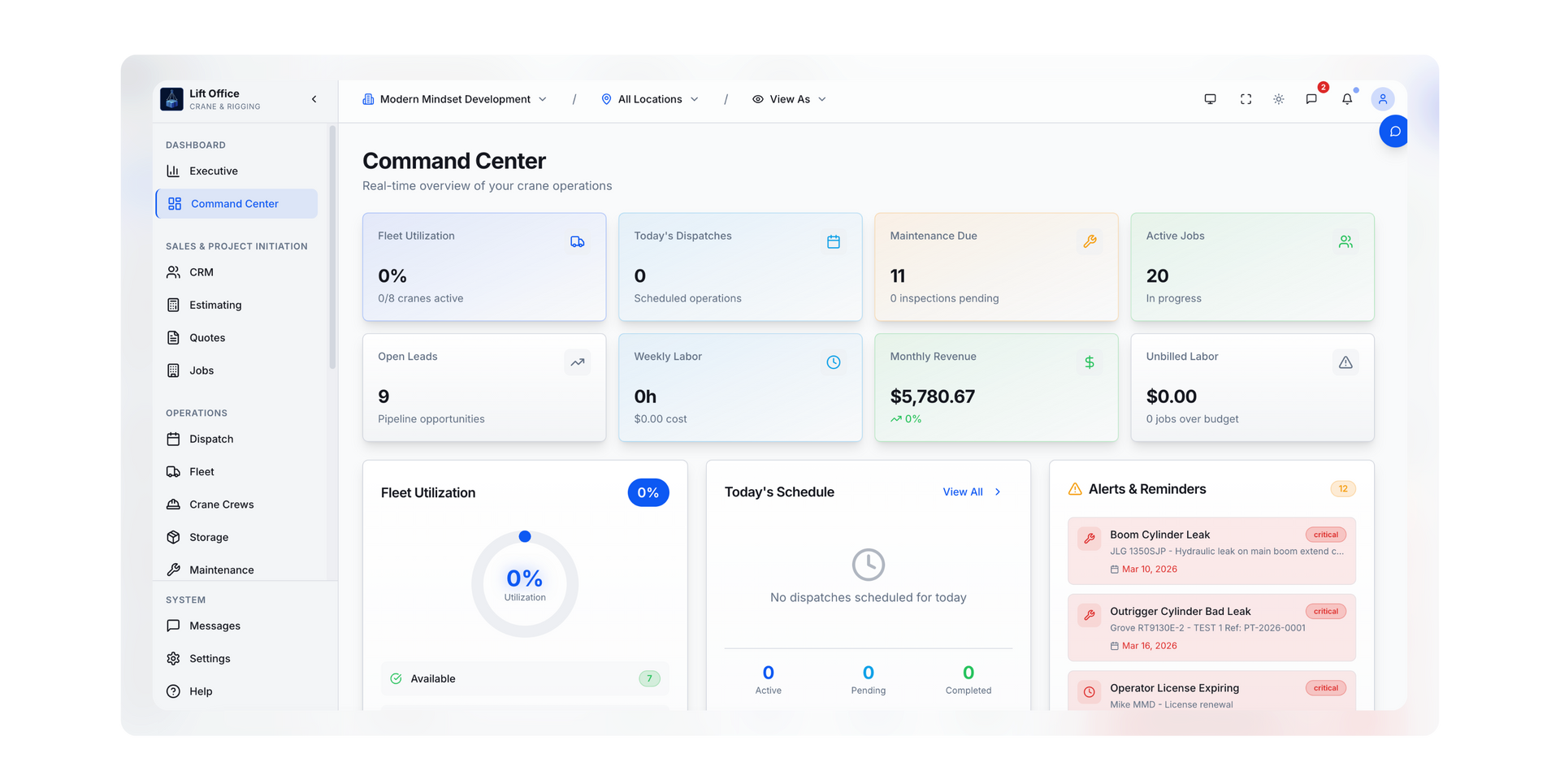
One of the biggest advantages of a centralized business platform is visibility. Instead of assembling reports after the work has already happened, information is captured as part of the work itself. Project updates, customer activity, scheduling, invoicing, and field reports all contribute to a clearer picture of what's happening across the organization without requiring someone to spend an afternoon building pivot tables.
Sign #5: Your Processes Have Started Working Around the Software
This is usually the point where business owners begin feeling that something isn't quite right, even if they can't immediately identify the cause.
Employees create spreadsheets to keep track of information that's already stored somewhere else. Sticky notes become reminders for tasks that should be automated. Shared calendars exist alongside project schedules because neither system tells the complete story. Teams develop informal routines to compensate for limitations they encounter every day.
None of these workarounds appear particularly significant on their own. In fact, they're often signs of resourceful employees finding ways to keep work moving.
Collectively, though, they reveal something much more important.
The business has begun adapting itself to the software instead of expecting the software to support the business.
That's an easy trap to fall into because many off-the-shelf platforms are designed to satisfy as many customers as possible. They're built around common denominators, which means they inevitably ask businesses to change some aspect of how they operate in order to fit the application.
Sometimes that's perfectly reasonable.
Other times, those compromises accumulate until the software introduces just as much friction as it was intended to eliminate.
The Goal Isn't to Replace Excel
By this point, it's worth returning to something we mentioned earlier.
Excel isn't the enemy.
In fact, we still use it ourselves.
Spreadsheets remain one of the most valuable tools available for analyzing information, building financial models, forecasting budgets, and solving countless day-to-day business problems. They continue to play an important role in organizations of every size, from small family businesses to Fortune 500 companies.
The issue arises when a spreadsheet quietly becomes the foundation for processes it was never intended to manage.
Running projects, coordinating field teams, tracking customer relationships, managing documents, generating reports, and communicating across departments all require information to move freely throughout an organization. While spreadsheets can certainly support those activities, they aren't designed to serve as the connective tissue between every part of a growing business.
Recognizing that distinction is often the first step toward building systems that scale alongside the organization instead of holding it back.
A Better Approach Starts with Understanding the Business
One of the reasons Modern Mindset Development approaches software differently is because we've learned that technology is rarely the first problem that needs to be solved.
Businesses don't wake up one morning and decide they need custom software. They reach a point where growth has exposed inefficiencies that were easy to overlook when the company was smaller. Processes that once worked begin requiring more manual effort. Communication becomes more complicated. Employees spend increasing amounts of time maintaining systems instead of serving customers.
That's why every engagement begins with understanding the business itself.
Before discussing features or writing code, we spend time learning how information moves through the organization, where delays occur, and what obstacles employees encounter during an ordinary workday. Sometimes the answer is a custom platform. Sometimes it's integrating existing software. Sometimes it's improving a single workflow that creates ripple effects throughout the entire company.
Technology should never be implemented simply because it's available.
It should be introduced because it solves a meaningful problem.
That's the philosophy behind every solution we build.
Building Software Around People, Not the Other Way Around
There's no shortage of software on the market today. New platforms appear every year, each promising to automate more tasks, introduce more artificial intelligence, and become the single solution for every business.
The reality is more nuanced.
Every organization has its own people, processes, customers, and goals. Those differences are exactly what make a business successful, and they deserve technology that reflects them rather than forcing them into someone else's definition of an ideal workflow.
Custom software isn't about having something unique for the sake of being different. It's about removing unnecessary friction so employees can focus on the work that creates value instead of navigating systems that were never designed for them.
If your business is beginning to feel constrained by spreadsheets, disconnected applications, or processes that have become increasingly difficult to manage, it may not be a sign that you've chosen the wrong tools.
It may simply be a sign that your business has grown.
And that's a good problem to have—provided your technology is ready to grow with it.
Frequently Asked Questions
What are the signs that a business has outgrown spreadsheets?
Businesses often outgrow spreadsheets when information becomes difficult to manage, multiple versions of files exist, employees duplicate data entry, reporting takes too much time, and teams create manual workarounds to keep processes moving.
Is Excel bad for business operations?
No. Excel remains an excellent tool for organizing and analyzing information. The challenge occurs when a business relies on spreadsheets to manage complex workflows like project management, customer relationships, scheduling, reporting, and field operations.
When should a company consider custom software?
A company should consider custom software when existing tools no longer support its workflows, employees spend excessive time managing information, or the business has unique processes that standard software cannot accommodate.
Can custom software work with Microsoft 365 and existing business tools?
Yes. Custom software does not always replace existing technology. Modern solutions can integrate with platforms like Microsoft 365, accounting systems, CRM platforms, and other tools businesses already use.
Why choose custom software instead of another subscription-based platform?
Custom software is designed around a company's specific processes rather than forcing employees to adapt to a generic workflow. It can eliminate unnecessary complexity, connect existing systems, and support long-term growth.
Who benefits most from custom business software?
Growing companies with complex workflows, multiple departments, field teams, or specialized processes often benefit most from custom software solutions.
Close the gap from the field to the front desk.
Real-time reports. Zero double-entry. One platform. It’s time for a system that’s as mobile as your crew.