



Why Winning More Bids Doesn't Always Increase Profit

August 28, 2026

Share this article

Modern Mindset Development logo on blue background with tower and circuit-style graphics

In the construction industry, winning a new bid is always a reason to celebrate. It means revenue is coming in, crews will stay busy, and the business is growing. However, many mid-sized construction companies eventually hit a frustrating plateau: top-line revenue increases by millions, but the bottom-line net profit stays exactly the same—or worse, it shrinks.


This happens because revenue and profit are not permanently tied together. When a company focuses solely on winning more bids without upgrading the operational processes that support those jobs, the cost of doing business rises exponentially.


To understand why more work doesn't automatically mean more money, we have to look closely at how increased volume impacts daily operations, field crews, and office staff.

The Hidden Operational Costs of High-Volume Bidding

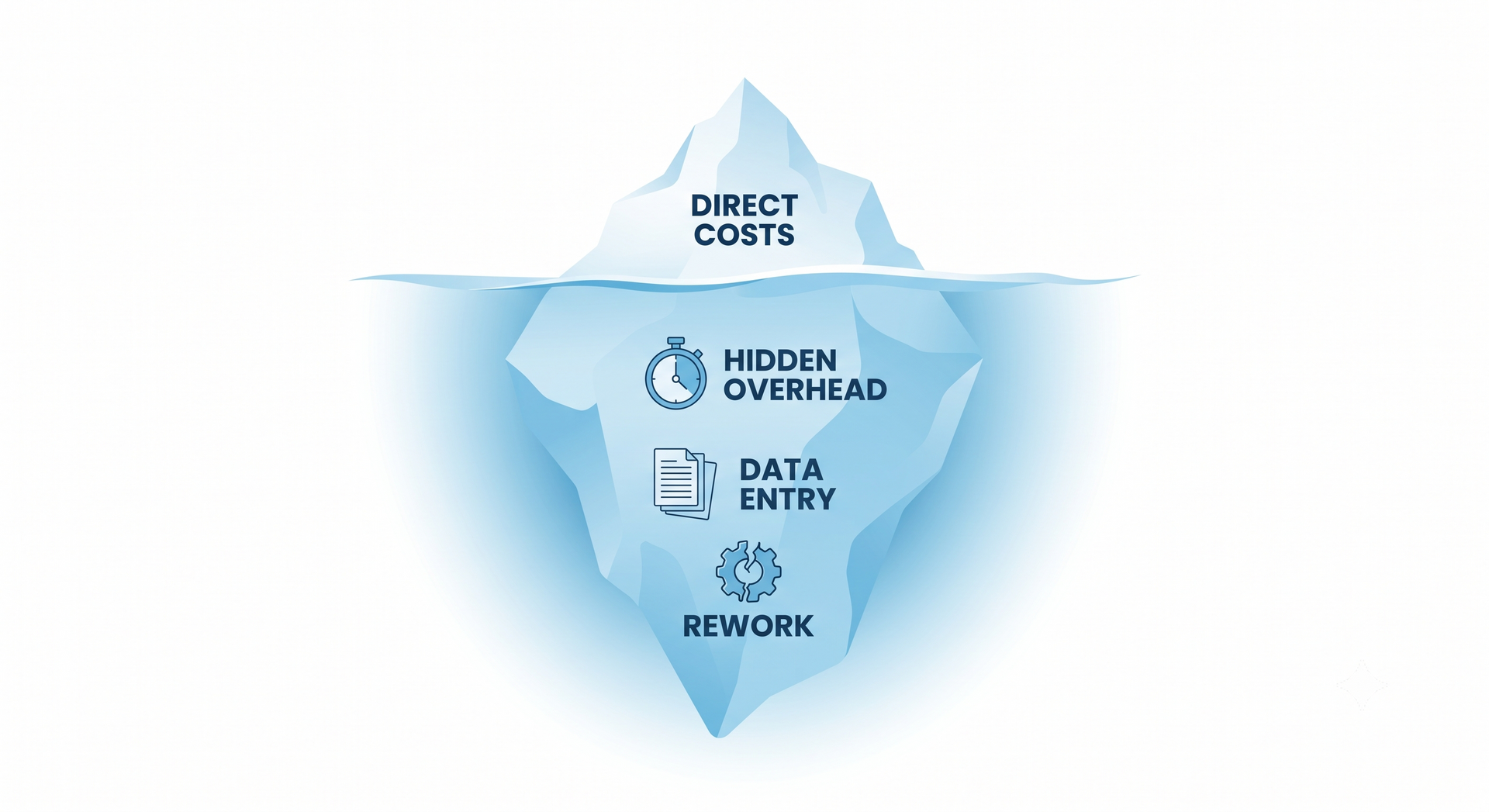
When you win more bids than your current systems can comfortably handle, you introduce friction into your business. That friction costs money. Here is where the margin erosion typically occurs:

1. Diluted Field Supervision

Your best superintendents and foremen are the ones who keep jobs profitable. When you take on too many projects simultaneously, those key leaders get stretched thin. They are forced to bounce between multiple job sites, shifting their focus from proactive planning to reactive firefighting. When supervision quality drops, labor efficiency plummets.

2. The Administrative Bottleneck

More projects mean more daily logs, more submittals, more RFIs, and more invoices. If your office relies on paper forms, messy spreadsheets, or fragmented software, the administrative burden quickly overwhelms your staff. This leads to delayed billing, missed change orders, and a strained cash flow that forces the company to rely on credit lines to float payroll.

3. The Rework Multiplier

Rushed jobs lead to mistakes. When crews are hurried, or when they are working off outdated plans because the office didn't have time to process a revision, work gets done incorrectly. Rework is a margin killer because you are paying for labor and materials twice while only billing the client once.

Blue iceberg chart showing hidden costs: hidden overhead, data entry, and rework beneath the surface

The Mathematical Reality of Margin Fade

In business terms, this phenomenon is often called "margin fade." To see how it impacts your bottom line, consider the standard equation for calculating net profit margin:

Net Profit Margin = (
Total Revenue - (Direct Costs + Indirect Overhead)
Total Revenue
)
× 100

When you win more bids, your Total Revenue goes up. However, if your systems are inefficient, your Indirect Overhead (admin hours, overtime, financing costs for delayed cash flow) and your Direct Costs (rework, wasted materials) scale at a much faster rate. As the denominator grows, the numerator gets squeezed, resulting in a lower overall percentage.

Process Over Volume: A Better Way to Grow

Before trying to fill the pipeline with new bids, construction leaders should focus on executing their current backlog perfectly. Applying a continuous improvement mindset—such as the Plan-Do-Study-Act (PDSA) framework—helps identify root causes of profit loss rather than just treating the symptoms.

Step 1: Evaluate Your True Capacity

Take an honest look at your current resources. How many jobs can your primary teams manage without working excessive overtime or dropping the ball on communication? Find that threshold and make it your baseline.

Step 2: Standardize Field-to-Office Data

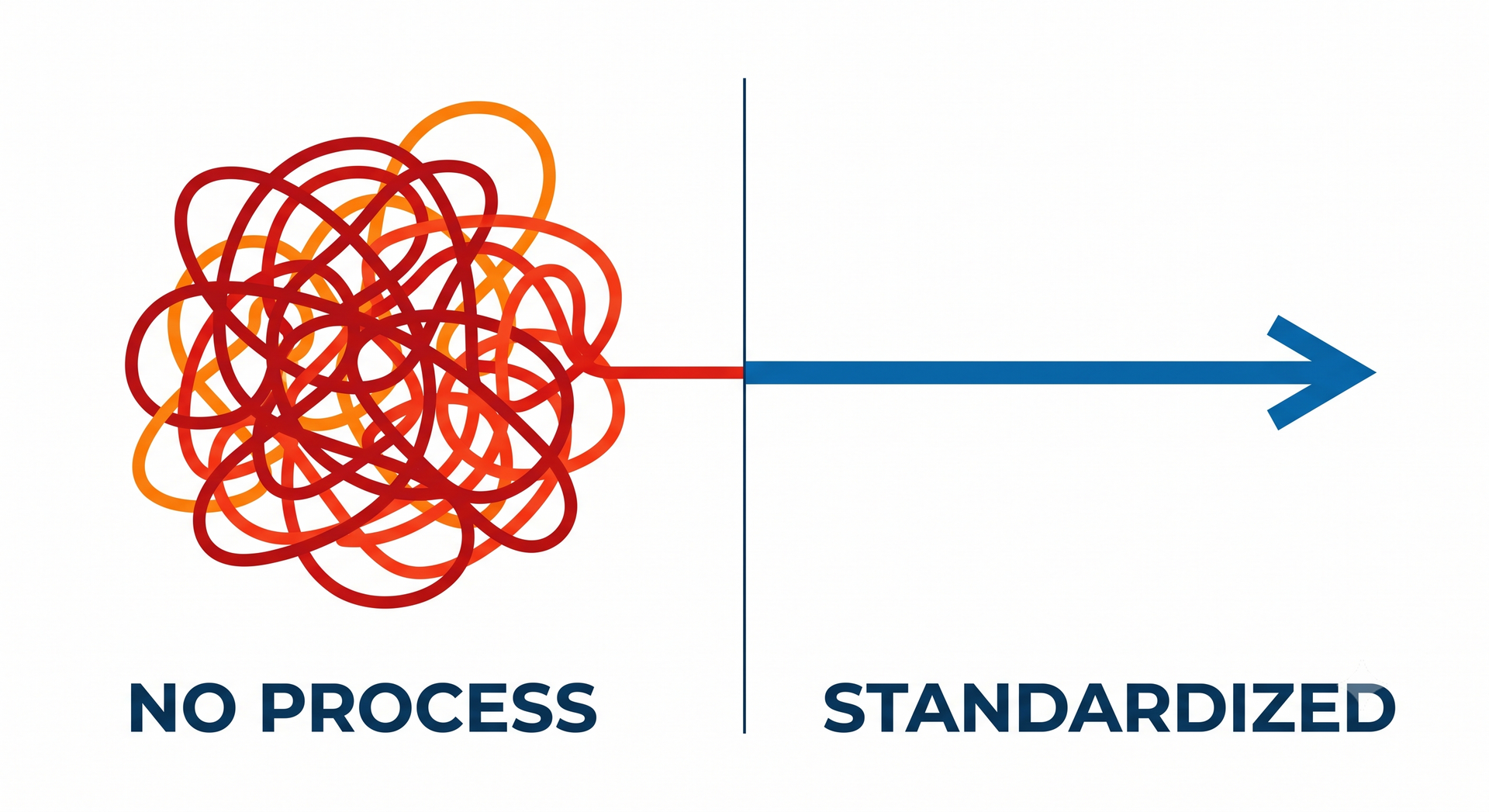
Identify the bottlenecks in how information moves from the job site to the office. Establish a standard, non-negotiable process for how field crews submit time, report progress, and document change orders. Clear processes prevent revenue leakage.

Step 3: Bid Strategically, Not Reactively

Instead of bidding on everything that crosses your desk, analyze your historical data. Identify which types of projects, clients, or specific scopes of work yield the highest margins with the least amount of operational friction. Focus your estimating efforts exclusively on those targets.

Messy red scribbles labeled “NO PROCESS” point to a blue arrow toward “STANDARDIZED”

When to Introduce Technology

A common mistake is buying new software to manage the chaos of too many projects. Software alone will not fix a broken estimating or project management process; it will only help you execute a bad process faster.


Technology should only be introduced after you have a clear understanding of your workflows. Once your operational standards are set, a configurable platform like Lift Office can step in to eliminate duplicate data entry, centralize your project documents, and give you real-time visibility into your true job costs. By pairing disciplined processes with the right technology, you can ensure that every new bid you win actually translates to money in the bank.

Frequently Asked Questions

  • Why do my construction profit margins shrink as my revenue grows?

    This is often called "margin fade." When you take on more projects than your current systems can comfortably handle, hidden operational costs rise rapidly. Field supervisors get stretched thin, rework increases due to rushed planning, and the office gets backlogged with manual data entry. These extra direct and indirect costs eat away at the profits you expected from the new bids.

  • How do I know if my company is taking on too much work?

    The clearest signs are usually found in your daily operations rather than your bank account. Look for red flags like a sudden increase in unbilled change orders, field crews waiting on site for materials or updated instructions, and office staff working excessive overtime just to keep up with invoicing. If these things are happening regularly, your operational capacity is maxed out.

  • Will new project management software solve our profitability issues?

    Software alone rarely solves profitability issues. If your current field-to-office communication processes are broken, adding new software will only speed up the flow of bad data. The best approach is to first map out and standardize your daily workflows. Once your internal processes are clear, configurable technology can step in to automate the heavy lifting.

  • What should we do instead of bidding on every available project?

    Focus on bidding strategically based on your historical data. Review your past projects to identify which types of jobs, specific scopes of work, or clients yielded the highest margins with the least amount of operational friction. Concentrate your estimating efforts entirely on those targets.

Close the gap from the field to the front desk.

Real-time reports. Zero double-entry. One platform. It’s time for a system that’s as mobile as your crew.

Recent Posts

Blue logo reading “Modern Mindset Development” over a faint background of a person at a computer
August 20, 2026
Winning more bids feels like growth, but taking on extra volume can strain operations and shrink margins. Learn how to scale construction profits properly.

Blue logo reading “Modern Mindset Development” over a faint building background
By Modern Mindset Development August 5, 2026
Discover how Modern Mindset Development partnered with Veteran Crane to create Lift Office, helping streamline operations for field service businesses.

Blue tech-themed banner with laptop and logo text “Modern Mindset Development”
By Modern Mindset Development July 21, 2026
Still running your business with spreadsheets? Learn five signs you've outgrown Excel and how custom software can streamline your operations.

Blue graphic showing “2016” above “2026” with Modern Mindset Development logo and curved arrow between them
June 30, 2026
Explore how field service operations evolved from spreadsheets and calls in 2016 to real-time connected systems in 2026 for better visibility and control.

Modern Mindset Excellence banner with blue tech-themed office scene and man viewing a monitor
June 19, 2026
Disconnected office and field teams cause delayed billing, rework, and blind spots. Learn how to fix broken workflows and build a connected operation.

Modern Mindset presentation with three people in safety gear at a whiteboard
June 11, 2026
Adding apps won't fix broken operations. Learn how to identify workflow bottlenecks, improve field-to-office communication, and scale your business.

Blue promo graphic with “Modern Mindset” text and a black device printing white shredded paper
May 15, 2026
Lift Office transforms crane project management. Ditch paper tickets, digitally dispatch resources, and invoice minutes after a job is complete.
Modern Mindset Development displayed on a desktop monitor in a blue-toned workspace
May 8, 2026
Discover how custom software solutions from Modern Mindset consolidate subscriptions, automate daily tasks, and eliminate unprofitable gray work to boost ROI.
Text reading:  “Where your business is losing money in 2026” by Modern Mindset Development
April 17, 2026
Where your business is losing money in 2026—from manual work to disconnected systems—and how fixing the right processes can help you regain revenue.
Announcement graphic: Modern Mindset Development partners with ASL Education Center.
April 7, 2026
Modern Mindset Development partners with ASL Education Center to build custom software and tools that enhance ASL assessment, testing, and accessibility for schools and organizations.