



How Much Does Poor Communication Cost a Construction Company?

August 20, 2026

Share this article

Blue banner with “Modern Mindset Development” text and a faint headset-wearing person in the background

In construction, profit margins are rarely wiped out by one massive failure. Instead, profitability bleeds out in small, daily increments: an unrecorded scope change, a crew waiting two hours for updated structural plans, or office staff spending Fridays chasing down handwritten paper timecards.


For mid-sized construction companies managing multiple active job sites, maintaining clear, timely communication between field superintendents and office staff is a constant operational hurdle.


Understanding exactly where communication breaks down—and calculating its true impact on your bottom line—is the first step toward protecting your margins.

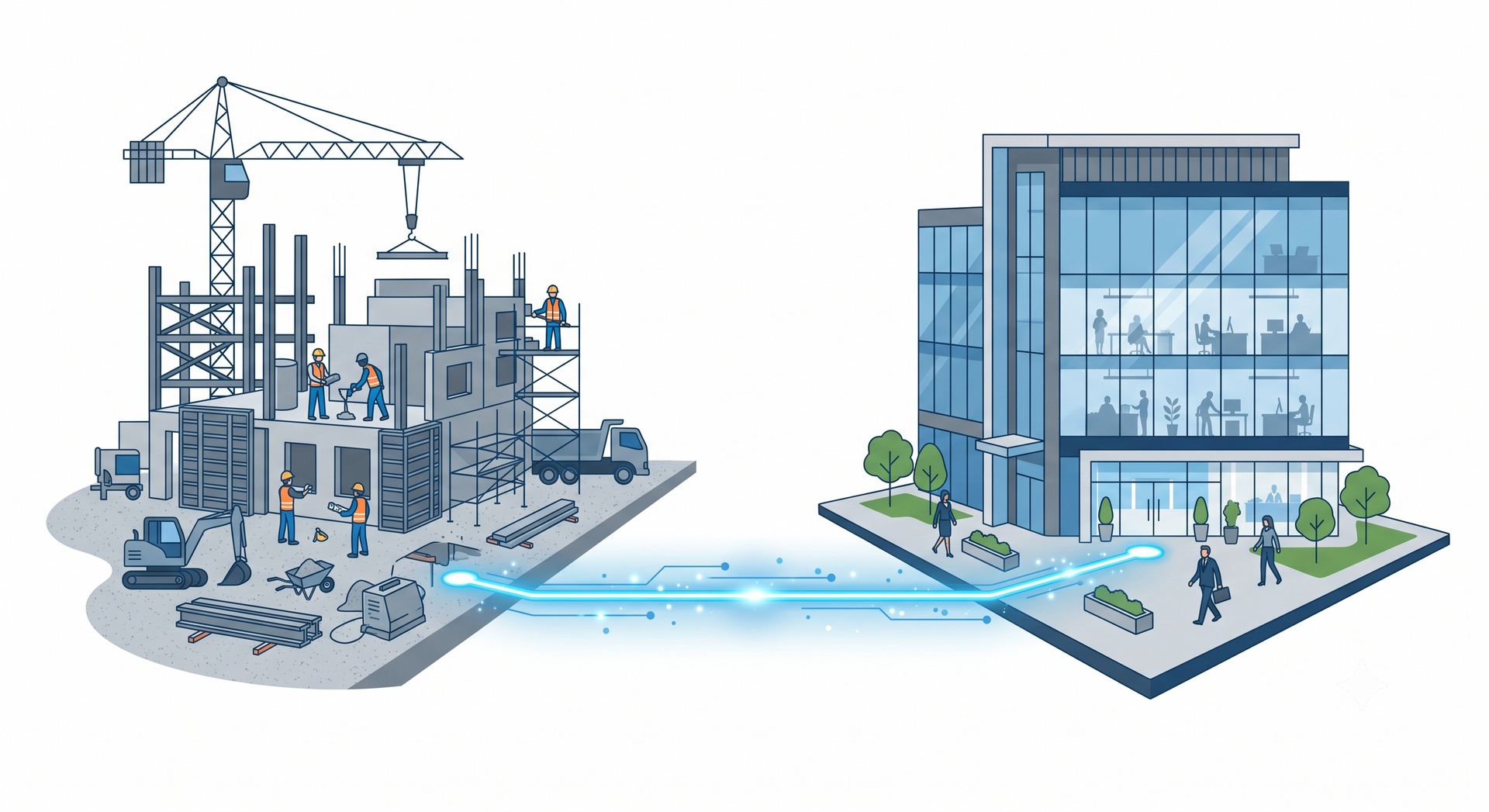
Construction site and modern office building connected by a glowing digital data link

The Four Major Drivers of Field-to-Office Communication Waste

When systems are fragmented, information moves slowly or gets lost entirely. Here is where field-to-office miscommunication creates direct financial losses:

1. Uncaptured Verbal Change Orders

Subcontractors and field crews routinely perform extra work after a verbal request from an owner or general contractor on site. If that request is noted on a scrap of paper or kept in someone's head, it never reaches the office billing department. You end up paying for the labor and materials, but you never invoice the client.

2. Building Off Outdated Plans

When architectural revisions stay locked in an email thread in the office, field superintendents continue working off older prints. Building to the wrong specification guarantees rework. Paying labor twice and purchasing materials twice for the exact same phase of a project directly guts your gross profit.

3. Idle Crew and Equipment Time

When field teams arrive on site without confirmed material deliveries, verified site access, or updated instructions, work comes to a halt. A ten-person crew sitting idle for just one hour while waiting for clarification from the office represents hundreds of dollars in unrecoverable costs.

4. Administrative Data Chasing

When field updates, daily logs, and timecards arrive late or in handwritten form, office staff spend hours transcribing data into spreadsheets. By the time discrepancies or missing hours are noticed, days have passed, making verification difficult and delaying client invoicing.

The Formula: Calculating Your Communication Costs

To measure the financial damage communication gaps cause in your operations, use this three-part breakdown.

Annual Cost of Communication Failure
Direct Rework Costs + Admin Data Chasing + Unbilled Change Orders

How to Audit Your Business in 3 Steps

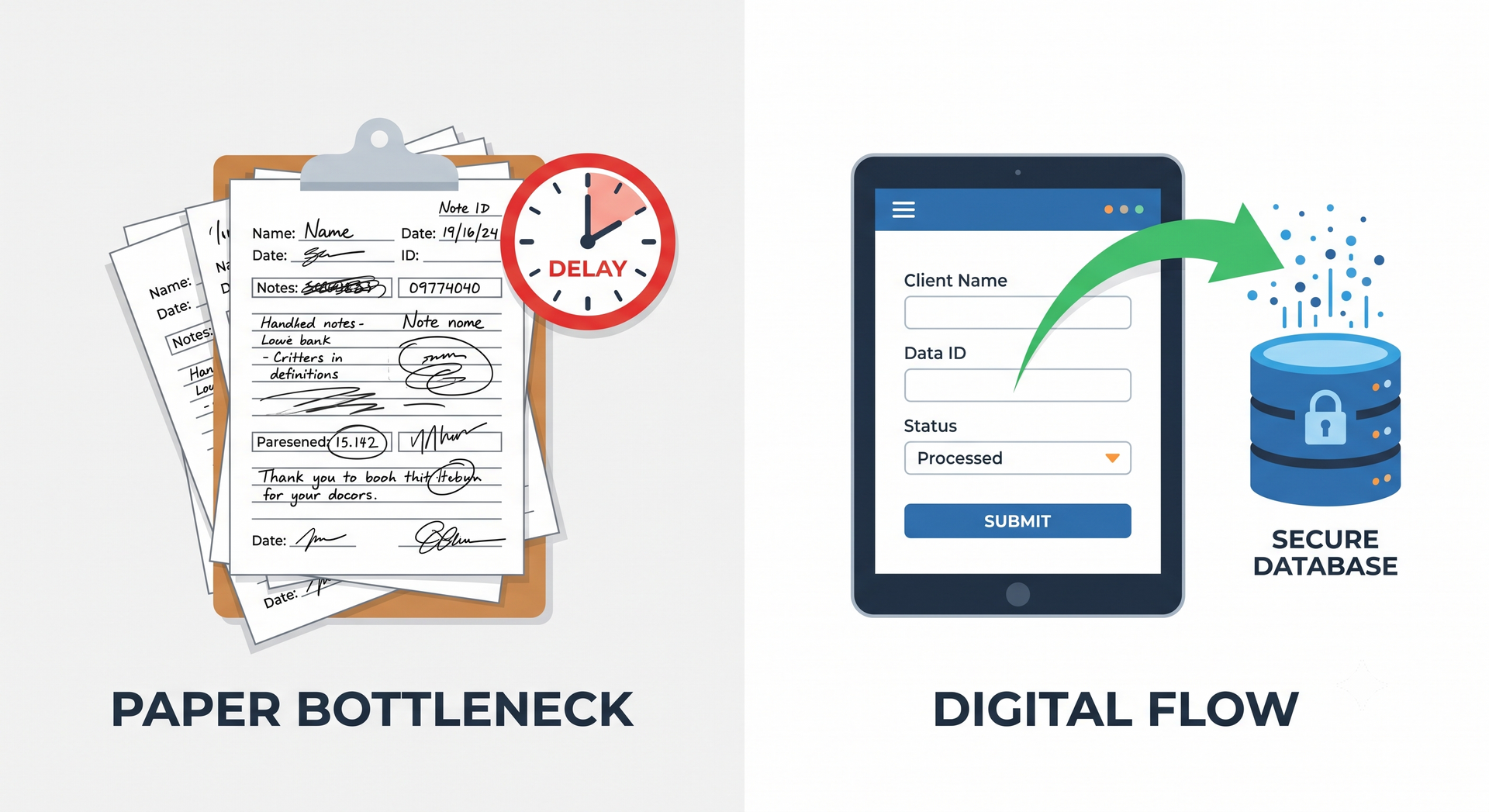
Paper forms labeled “paper bottleneck” beside a tablet showing a “digital flow” to a database.

If you want to pull real numbers from your own active projects, run this quick 30-day internal audit:

Step 1: Calculate Rework Costs

Review project logs from your last three completed jobs. Tally every labor hour and material expense spent correcting errors caused by wrong specifications or outdated field instructions.

Step 2: Track Office "Chasing" Hours

Have your administrative team log the exact time they spend calling superintendents for missing receipts, clarifying illegible handwriting on timecards, or re-entering paper daily logs into spreadsheets.

Step 3: Compare Daily Logs to Final Invoices

Audit completed job logs against the final invoices sent to the client. Search specifically for field notes detailing extra tasks requested by the owner that were never converted into formal, billed change orders.

Process First, Technology Second

Buying new software does not automatically solve a communication problem. If your field teams lack a clear, simple habit for recording daily updates, putting a new smartphone app in their hands will only move poor-quality data faster.


At Modern Mindset Development, we advocate for a continuous improvement approach inspired by the Plan-Do-Study-Act (PDSA) cycle:


  • Plan: Map out how field data currently moves to the office. Identify where information gets delayed, dropped, or re-typed.


  • Do: Establish clear operational standards for daily reports, photo uploads, and change order recording.


  • Study: Measure how well field crews adopt the new standards. Are logs submitted daily? Is the data complete?


  • Act: Introduce configurable operational software like Lift Office that adapts to your refined workflow—rather than forcing your team to adapt to rigid software.


When technology supports a well-defined operational habit, field-to-office communication becomes clear, administrative burden drops, and project margins remain predictable.

Frequently Asked Questions

  • How much does rework actually cost the average construction company?

    Rework typically accounts for 4% to 6% of total project costs, and research indicates that nearly half of that rework stems directly from poor communication and outdated project data shared between the office and the field.

  • Why do field crews resist using software for daily reporting?

    Field workers often resist software because standard off-the-shelf platforms are overly complex and built for office managers rather than field personnel. If an application takes too many clicks or requires excessive typing, crews revert to paper or verbal updates. Software must be configured to match the simple, fast reality of a job site.

  • What is the most common cause of unbilled change orders in construction?

    The most common cause is informal verbal requests on site. A client asks a superintendent to perform extra work, and the crew completes it immediately to keep the project moving. Without a quick, structured process to document that request on the spot, the details never reach the office billing team.

  • Can we fix communication problems without buying expensive new software?

    Yes. Software is simply a tool to support a process. You can make immediate progress by standardizing your paper daily logs, setting clear expectations for end-of-day reports, and defining a strict procedure for logging change orders before work begins. Once those habits are established, technology can be introduced to automate and scale the process.

Close the gap from the field to the front desk.

Real-time reports. Zero double-entry. One platform. It’s time for a system that’s as mobile as your crew.

Recent Posts

Blue logo reading “Modern Mindset Development” over a faint building background
By Modern Mindset Development August 5, 2026
Discover how Modern Mindset Development partnered with Veteran Crane to create Lift Office, helping streamline operations for field service businesses.

Blue tech-themed banner with laptop and logo text “Modern Mindset Development”
By Modern Mindset Development July 21, 2026
Still running your business with spreadsheets? Learn five signs you've outgrown Excel and how custom software can streamline your operations.

Blue graphic showing “2016” above “2026” with Modern Mindset Development logo and curved arrow between them
June 30, 2026
Explore how field service operations evolved from spreadsheets and calls in 2016 to real-time connected systems in 2026 for better visibility and control.

Modern Mindset Excellence banner with blue tech-themed office scene and man viewing a monitor
June 19, 2026
Disconnected office and field teams cause delayed billing, rework, and blind spots. Learn how to fix broken workflows and build a connected operation.

Modern Mindset presentation with three people in safety gear at a whiteboard
June 11, 2026
Adding apps won't fix broken operations. Learn how to identify workflow bottlenecks, improve field-to-office communication, and scale your business.

Blue promo graphic with “Modern Mindset” text and a black device printing white shredded paper
May 15, 2026
Lift Office transforms crane project management. Ditch paper tickets, digitally dispatch resources, and invoice minutes after a job is complete.

Modern Mindset Development displayed on a desktop monitor in a blue-toned workspace
May 8, 2026
Discover how custom software solutions from Modern Mindset consolidate subscriptions, automate daily tasks, and eliminate unprofitable gray work to boost ROI.
Text reading:  “Where your business is losing money in 2026” by Modern Mindset Development
April 17, 2026
Where your business is losing money in 2026—from manual work to disconnected systems—and how fixing the right processes can help you regain revenue.
Announcement graphic: Modern Mindset Development partners with ASL Education Center.
April 7, 2026
Modern Mindset Development partners with ASL Education Center to build custom software and tools that enhance ASL assessment, testing, and accessibility for schools and organizations.
A person wearing a yellow hard hat and orange safety vest stands at a construction site, looking toward a crane.
March 27, 2026
Discover where construction workflows break. Learn how hidden gaps between field, office, and systems slow operations and delay revenue.