The Executive’s Guide to Rolling Out Field Software Without Sparking a Revolt
Implementing new software in an office environment is challenging; rolling it out to a field team in construction, logistics, or heavy equipment is an entirely different battle. Field workers are uniquely sensitive to tools that slow them down, complicate their jobs, or feel like corporate surveillance.
When a technology rollout fails in the field, it is rarely a technology problem. It is almost always a change management problem. By shifting your approach from top-down enforcement to collaborative problem-solving, you can drive high adoption rates and build a tech-friendly culture.

Involve the Field Before You Make a Decision
The fastest way to spark a revolt is to hand a field crew a tablet with software they have never seen and demand they use it by Monday. Executives often select software based on backend reporting capabilities, ignoring the user experience of the person wearing gloves in the rain.
- Build a pilot committee: Select two or three of your most respected, pragmatic field workers to test potential solutions.
- Listen to their immediate objections: If they say a digital form has too many required fields, believe them. A form that takes 10 minutes to fill out will be abandoned; a form that takes 2 minutes will be adopted.
- Give them veto power: If your pilot committee universally rejects a tool, do not force it.
Solve Their Problem First, Yours Second
Leadership usually implements new software to gain operational visibility, accelerate invoicing, or track job costing. The field team does not care about your dashboard. They care about finishing the job safely and getting home on time.
To gain adoption, the software must provide immediate, tangible value to the user. Demonstrate how the new tool eliminates the need for them to drive paper tickets back to the office, stops the office from calling them three times a day for updates, or makes requesting materials faster. When technology removes friction from their day, adoption happens naturally. As we discussed in The Hidden Cost of Disconnected Office and Field Teams, bridging this communication gap is where the true ROI lives.

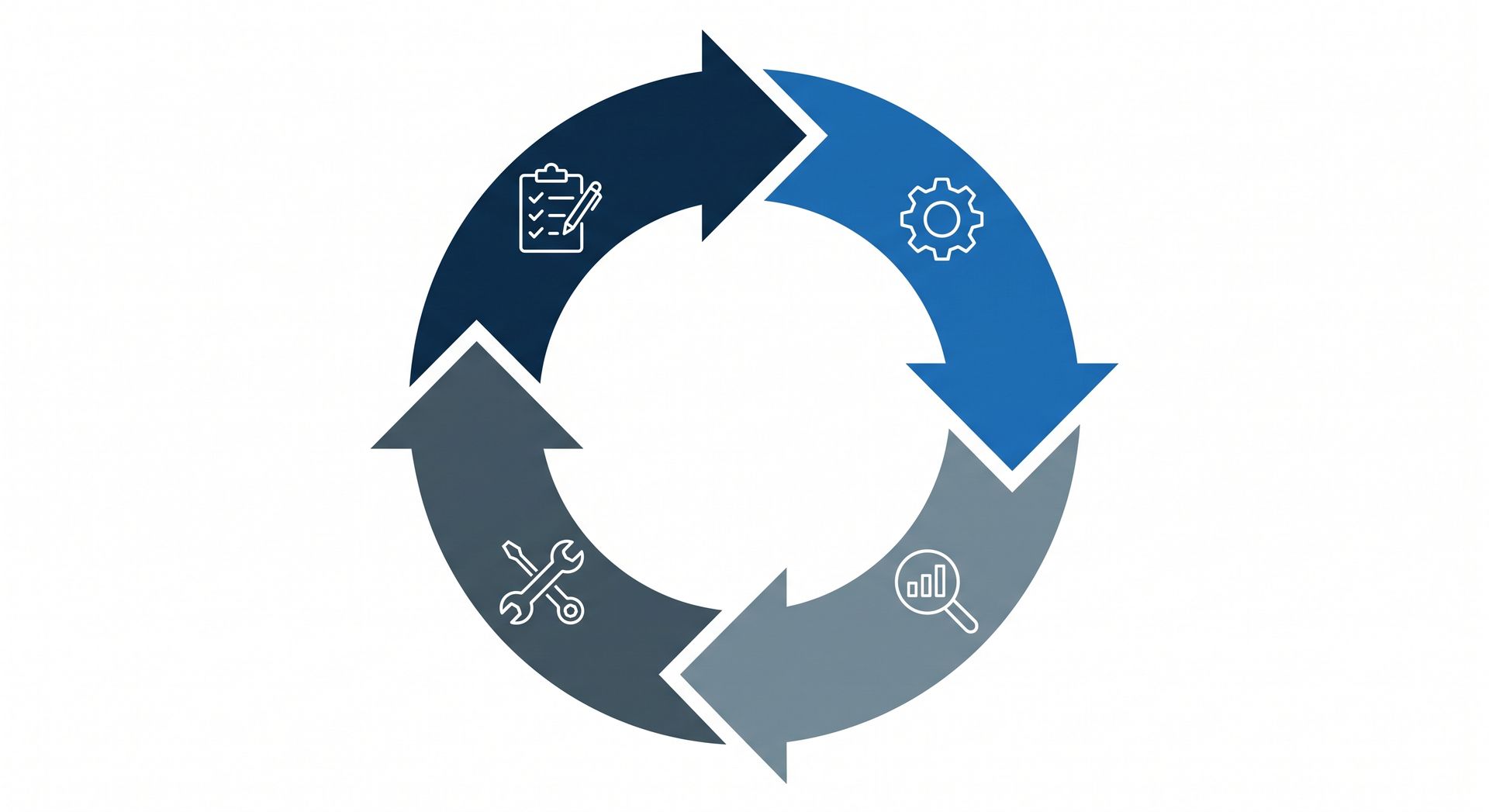
Apply the Plan-Do-Study-Act (PDSA) Method
A massive, company-wide launch on a single day is a recipe for chaos. Instead, treat the rollout as an iterative process.
- Plan:
Identify one specific, painful workflow to digitize first—such as moving from paper daily logs to digital logs inside a streamlined platform like Lift Office.
- Do: Roll this single feature out to one specific crew or location.
- Study: Monitor the results closely. Where did they get stuck? Did the software crash in a dead zone?
- Act: Adjust the workflow, remove unnecessary data fields, and fix the bugs before rolling it out to the next crew.
Support Requires More Than a PDF Manual
Training is an event; support is an ongoing relationship. Handing a field worker a dense training manual is ineffective. You must provide targeted, accessible support that respects their environment.
Create short, one-minute video tutorials for specific tasks that they can watch on their phones. Ensure there is a dedicated, responsive person in the office they can call when they hit a roadblock. When field workers know they are supported rather than judged during the learning curve, resistance transforms into competence.
What Happens When You Actually Listen to the Field?
When you stop forcing rigid workflows and start building around your team's reality, adoption is natural. Recently, Megan Borrell, who helped deploy our Lift Office platform for a heavy equipment operation, shared this experience:
"Our experience with LIFT by MMD has been nothing short of AMAZING... We were NEVER told 'no.' Every time I explained an idea, whether it was moving a button, creating a workflow, or getting from one screen to another faster, he made it happen, often within minutes while we were still on the call... We’ve successfully built a true start-to-finish operating system for our crane company. We now manage estimates, scheduling/dispatching, invoicing, preventative maintenance, DOT tracking, mileage tracking, tickets, communication, reporting, and more all in one place."
Megan Borrell, Local Guide
Stop Forcing Workflows That Don't Fit
If your field team is actively resisting your technology, the software likely doesn't match how they actually work. At Modern Mindset Development, we don't believe in forcing businesses into rigid, cookie-cutter platforms. We study your operations, identify the friction points, and build intuitive custom software and integrations that your team will actually want to use. Schedule a call with us today to discuss how we can bridge the gap between your office and the field.
Frequently Asked Questions
Why do field teams often resist new software?
Field teams resist software when it feels like corporate surveillance, adds unnecessary administrative work to their physical labor, or features a clunky interface that is difficult to use on a mobile device or in harsh weather conditions.
How can leadership improve software adoption rates in the field?
Leaders can improve adoption by involving highly respected field workers in the software selection process, running small pilot programs before a company-wide launch, and ensuring the software solves a specific problem for the field worker (like eliminating paper ticket drop-offs) before focusing on office metrics.
What is the PDSA method for software implementation?
The Plan-Do-Study-Act (PDSA) method is a continuous improvement framework. For software, it means planning a small rollout for a specific feature, doing a test run with a single crew, studying the friction points or bugs they encounter, and acting to fix those issues before releasing the software to the entire company.
Should we build custom software or buy an off-the-shelf app for our field crew?
If off-the-shelf apps force your field team into unnatural workflows or require them to do double data entry, a custom software solution is often a better long-term investment. Custom software is designed to map exactly to your existing operational reality, making it significantly easier for field teams to adopt.
Close the gap from the field to the front desk.
Real-time reports. Zero double-entry. One platform. It’s time for a system that’s as mobile as your crew.