


The Hidden Cost of Disconnected Office and Field Teams

June 19, 2026

Share this article

Construction worker using a tablet at a job site beside colleagues reviewing digital project data on a screen

Most businesses don’t realize how expensive their "normal" communication gaps actually are.


On the surface, things look fine: projects are getting done, teams are busy, and work is moving forward. But underneath that activity, there is often a constant, quiet breakdown between what happens out in the field and what actually gets recorded in the office.


That disconnect slows everything down. Not in dramatic, business-halting ways, but in sneaky, daily delays that add up to massive financial leaks by the end of the year.

Where the Disconnect Actually Happens

Most companies don’t have a people problem; they have a handoff problem. The gap between the office and the field shows up in predictable ways:


  • Field updates aren’t logged in real time.


  • Office staff waste hours chasing down missing information.


  • Job statuses are completely unclear unless you call someone.


  • Paper forms or job-site photos are submitted days late.


  • Data is manually re-entered into multiple systems.


  • Crucial context is lost in a sea of texts, calls, and emails.


Too often, these issues are accepted as “just how the industry works.” In reality, this gap is one of the most expensive leaks in your daily operations.

The Office vs. Field Reality

Both sides are working hard, but the system between them is broken. Here is what this disconnect typically looks like on the ground:

The Field Team's Experience The Office Team's Experience
"I already sent that update." "We’re still waiting on updates."
"I’ll text the photos when I get a chance." "Can someone confirm what’s actually been done?"
"I wasn’t sure which app to submit this in." "I don't have the latest information to bill the client."
"Stop micromanaging me." "Stop making me chase you for data."

The Real Cost Isn’t Obvious (At First)

The cost of disconnected teams rarely shows up as a single line item on your P&L. Instead, it bleeds your business in five specific areas:


  • Lost Time From Rework: When information is missing or unclear, jobs get re-checked, data gets re-entered, and highly paid people spend their time fixing preventable mistakes.


  • Delayed Billing and Cash Flow: If field documentation is late or incomplete, invoicing gets pushed back. Cash flow slows down, and accounting becomes a reactive game of catch-up.


  • Operational Blind Spots: Leadership is left unable to answer simple questions like, “What’s the exact status of this job?” or “Are we actually on track?”


  • Communication Overload: Instead of relying on a system, managers become human information routers. Updates happen through fragmented calls and texts, drastically slowing down decision-making.


  • Employee Frustration: Field crews feel micromanaged by constant check-ins, office teams feel overwhelmed by missing data, and nobody completely trusts the information in the system.
Laptop covered with sticky notes and office clutter on a desk

Why This Happens to Growing Companies

This problem rarely exists on day one. It creeps in when a company successfully grows past a certain point.


Informal communication works fine when you have one crew and a handful of clients. But as you take on more simultaneous job sites, hire more subcontractors, face stricter reporting requirements, and outgrow basic spreadsheets, the wheels start to fall off.


At this stage, yelling across the room or sending a quick group text simply stops working—but no structured workflow has been put in place to replace it.

The Root Problem: A Lack of Workflow Design

Let’s be honest: this isn’t a software issue at its core. It is a workflow breakdown.


Most businesses never intentionally design how information should move from the field to the office, from the office back to the field, and from individual teams up to leadership. Without an intentional design, communication naturally becomes reactive, manual, and wildly inconsistent.


What a Connected Workflow Actually Looks Like

A properly connected system does three distinct things:


  1. Captures Information at the Source: Field teams input data exactly once, in real time, right from the job site.
  2. Centralizes Visibility: Office teams and leadership see that exact same live information without asking for it.
  3. Eliminates Manual Handoffs: Nobody has to chase updates, and nobody has to type the same data into a second platform.
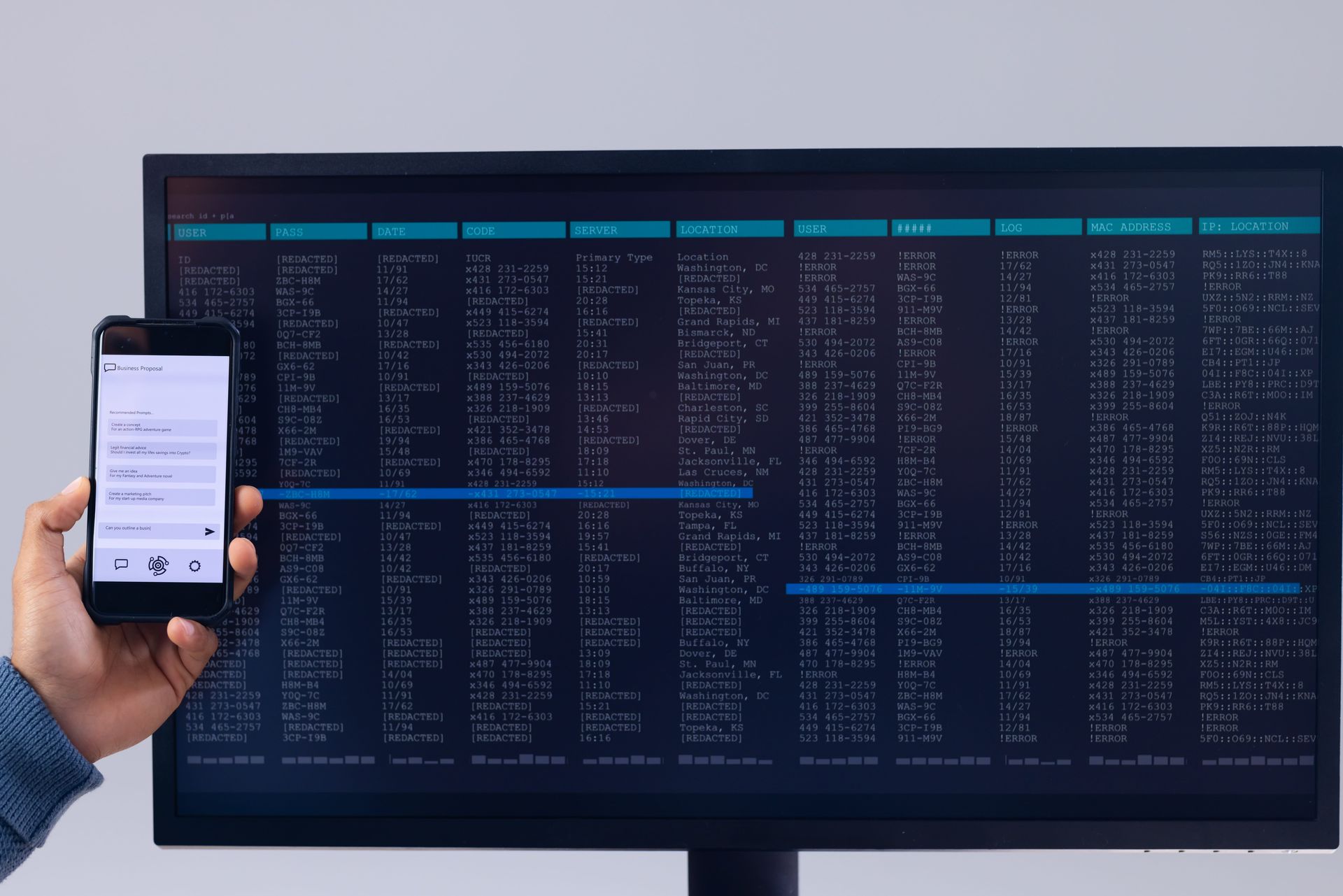
Hand holding a smartphone in front of a large monitor displaying code and data tables

5 Steps to Fix the Office–Field Disconnect

If you want to stop the bleeding, here is a practical roadmap to fixing the gap:


  • Map the Current Workflow: Honestly assess where information starts, where it gets delayed, and where it falls through the cracks.


  • Identify the Manual Handoffs: Find out who on your team is stuck re-entering data and what crucial details are being communicated completely outside of your systems.


  • Standardize Field Reporting: Clearly define what needs to be captured, reduce variability, and ensure submitting data is incredibly easy and mobile-friendly for the field crews.


  • Centralize Information Flow: Create a single source of truth for jobs and projects to eliminate duplicate systems and improve visibility.


Why Buying Another App Won't Save You

Many companies try to solve this by simply buying new software. But throwing a new tool at a broken process usually makes things worse.


Field teams refuse to adopt complicated apps. Office teams continue relying on side-channel texts and emails. Soon, your data is fragmented across even more platforms than before. Technology is only effective when the workflow underneath it makes sense.

The Modern Mindset Development Approach

At Modern Mindset Development, we don’t start by selling you software. We start by looking at how your teams actually communicate, where your information breaks down, and what is dragging your operations down.


Then, we design systems that connect your office and field teams in a way that feels natural, not forced. This is exactly why we utilize platforms like Lift Office—to unify operations, improve visibility, and completely remove the friction of manual communication.


If your office and field teams are constantly chasing updates, re-entering data, or working from entirely different versions of the truth, the issue isn’t a lack of effort—it’s a lack of structure.


Modern Mindset Development helps businesses design and implement workflows that bridge the gap between field and office operations. We build systems that match how your teams actually work, rather than forcing them to adapt to how a piece of software assumes they should work.


Ready to stop chasing data? Explore how Lift Office connects your operations or contact us to discuss fixing your workflow challenges today.

Frequently Asked Questions

  • Why is communication between office and field teams so difficult?

    Most companies rely on informal systems like text, email, and spreadsheets instead of intentionally structured workflows that standardize how information flows between locations.

  • What causes disconnects between field and office teams?

    The primary culprits are a lack of real-time reporting, entirely inconsistent processes from one employee to the next, and utilizing multiple disconnected tools that refuse to share data with one another.

  • How do you actually improve office and field communication?

    You improve it by standardizing field reporting, centralizing your data into one hub, and building digital workflows that ensure information is captured and shared in real time without human intervention.

  • Can software fix office and field communication issues?

    Only if the underlying workflow is properly designed first. Software alone cannot—and will not—fix a broken or inconsistent business process.

  • What industries benefit most from connected workflows?

    Construction, field services, healthcare inspections, and any operational business relying on mobile, remote, or distributed teams.

Close the gap from the field to the front desk.

Real-time reports. Zero double-entry. One platform. It’s time for a system that’s as mobile as your crew.

Recent Posts

Modern Mindset presentation with three people in safety gear at a whiteboard
June 11, 2026
Adding apps won't fix broken operations. Learn how to identify workflow bottlenecks, improve field-to-office communication, and scale your business.
Blue promo graphic with “Modern Mindset” text and a black device printing white shredded paper
May 15, 2026
Lift Office transforms crane project management. Ditch paper tickets, digitally dispatch resources, and invoice minutes after a job is complete.

Modern Mindset Development displayed on a desktop monitor in a blue-toned workspace
May 8, 2026
Discover how custom software solutions from Modern Mindset consolidate subscriptions, automate daily tasks, and eliminate unprofitable gray work to boost ROI.

Text reading:  “Where your business is losing money in 2026” by Modern Mindset Development
April 17, 2026
Where your business is losing money in 2026—from manual work to disconnected systems—and how fixing the right processes can help you regain revenue.

Announcement graphic: Modern Mindset Development partners with ASL Education Center.
April 7, 2026
Modern Mindset Development partners with ASL Education Center to build custom software and tools that enhance ASL assessment, testing, and accessibility for schools and organizations.
A person wearing a yellow hard hat and orange safety vest stands at a construction site, looking toward a crane.
March 27, 2026
Discover where construction workflows break. Learn how hidden gaps between field, office, and systems slow operations and delay revenue.
An aerial view of a busy construction site with cranes and buildings under construction, topped by the title text.
March 23, 2026
Off-the-shelf software often fails growing construction companies by creating workflow gaps, poor field-to-office communication, and costly inefficiencies. Learn why—and what to do instead.
Image of Lift Office logo
March 6, 2026
Learn what Lift Office is and how it helps crane & rigging companies streamline operations, manage jobs, improve field reporting, and simplify quoting and invoicing.
Maneessha Bommineni welcome post graphic for Modern Mindset Development
February 25, 2026
Meet Maneessha, a software developer joining Modern Mindset with expertise in Java, Spring Boot, ReactJS, and AWS, driven by growth and innovation.
Construction crane silhouette against a foggy building by Modern Mindset Development software.
February 11, 2026
Struggling with lost reports, delayed billing, and poor field communication? Learn how software not built for the field leads to risky workarounds.
Show More